

For People Who Stutter
Stuttering is Not a Choice —It's a Neurologic Condition
Understanding your stutter is the first step toward managing it with confidence. Everyone’s experience is unique, but with the right support and tools, stuttering doesn’t have to limit your opportunities. Stay in touch with us to receive updates on the latest advances in stuttering research and treatments.
Stay In TouchA Guide to Talking With Your Doctor About Stuttering
Thinking about treatment but unsure how to begin? This guide is here to help you take control of that process. It offers clear, practical guidance on how to talk to your doctor about stuttering, from describing your symptoms to exploring treatment options like speech therapy, counseling, and medication. It also helps you navigate situations where providers may not be familiar with current research. You know your experience best and this resource helps you communicate it and advocate for the care you deserve.
View Guide (PDF)


Yoshikazu Kikuchi, MD, PhD
Dr. Kikuchi is a person who stutters and an Assistant Professor of Otolaryngology Kyushu University School of Medicine. Dr. Kikuchi conducts research and provides clinical care to children, teenagers and families navigating stuttering. As one of the foremost medical minds in stuttering, Dr. Kikuchi provides his excellent insights about the brain basis of stuttering and what paths exist for treatment and therapy.
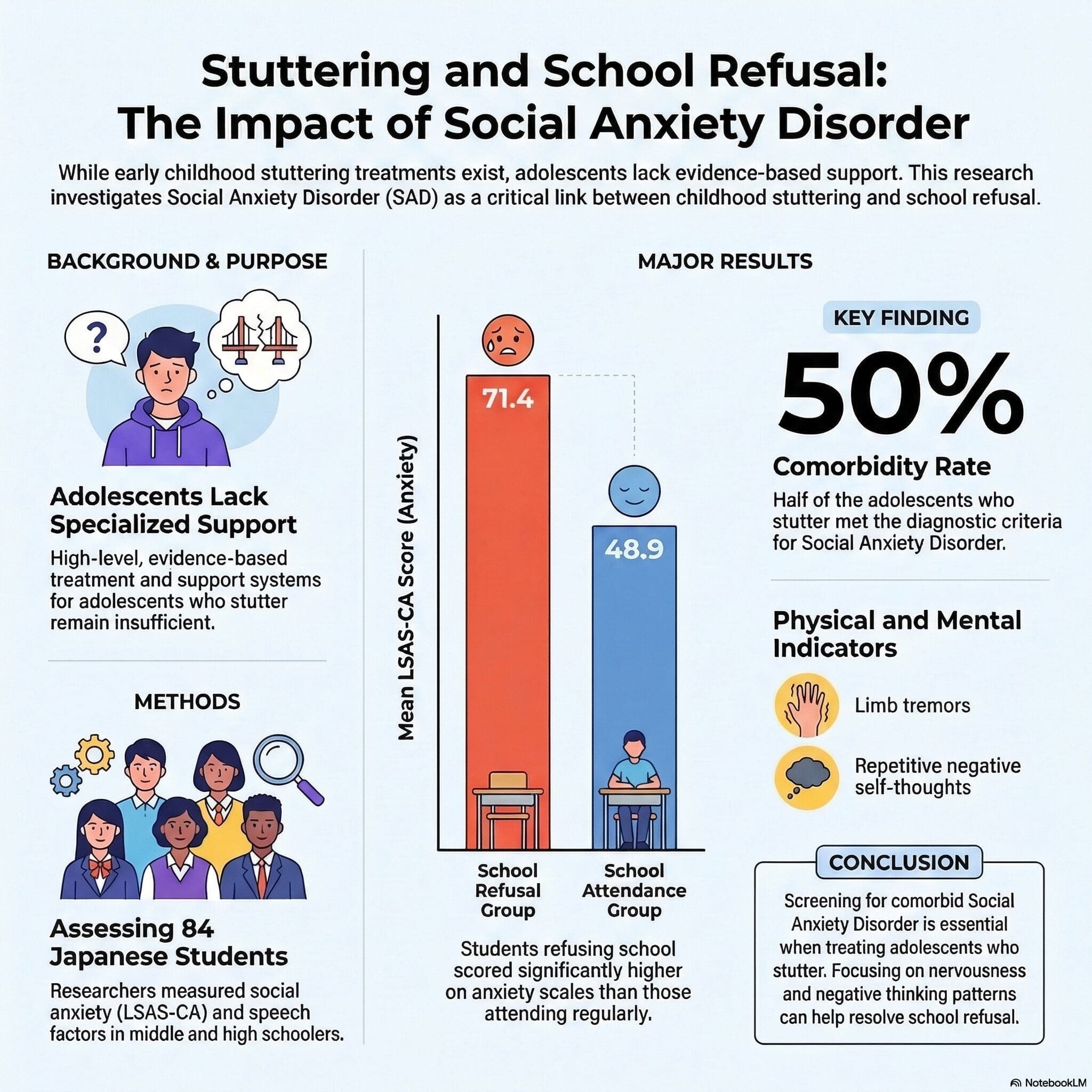
Childhood Stuttering and School Refusal
In a study of adolescents who stutter, 26% were refusing school and 50% met the criteria for Social Anxiety Disorder. The takeaway for parents: your child’s emotional experience of stuttering matters as much as their speech and noticing the signs early changes outcomes.
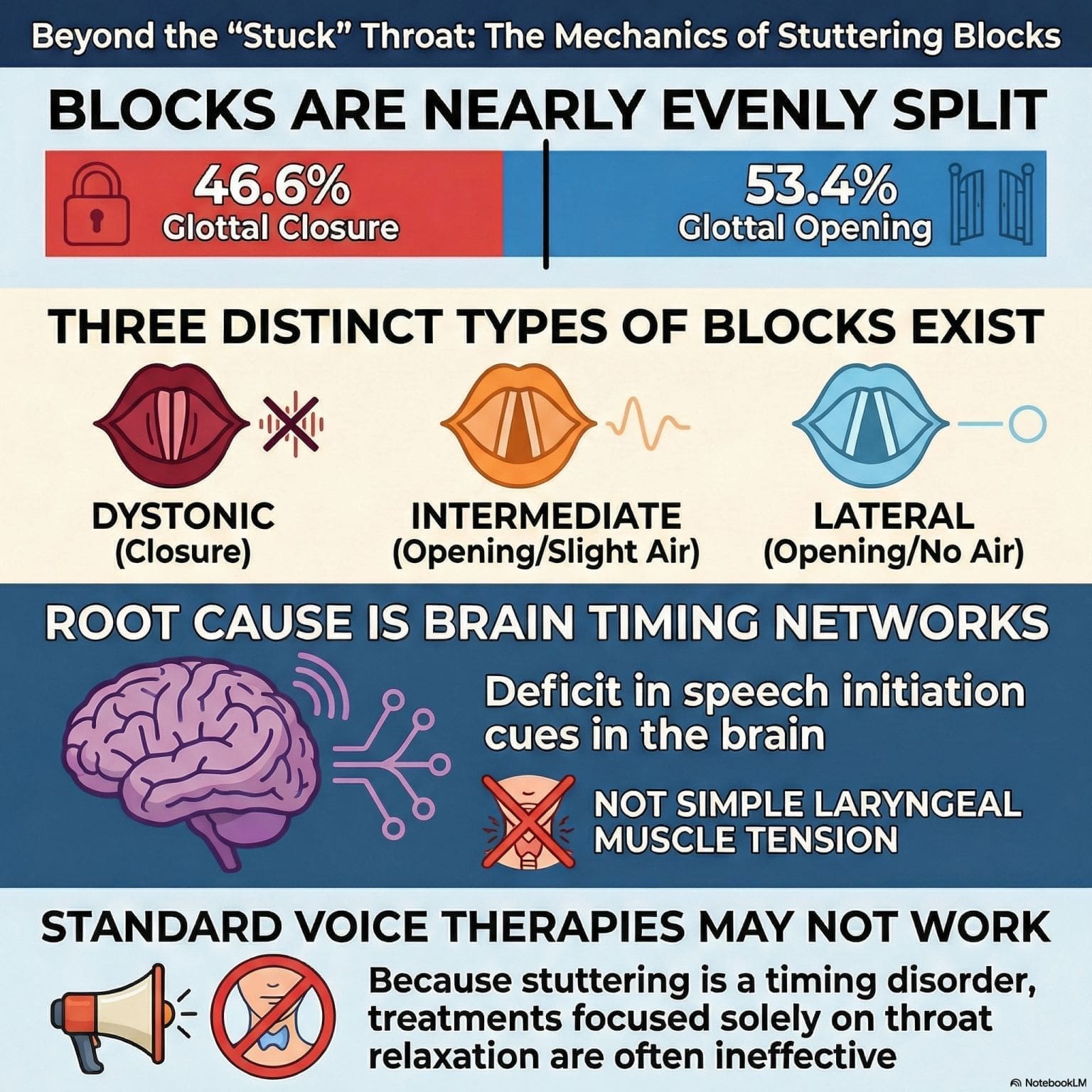
Beyond Fluency
Stuttering is more than what you hear.
Learn More
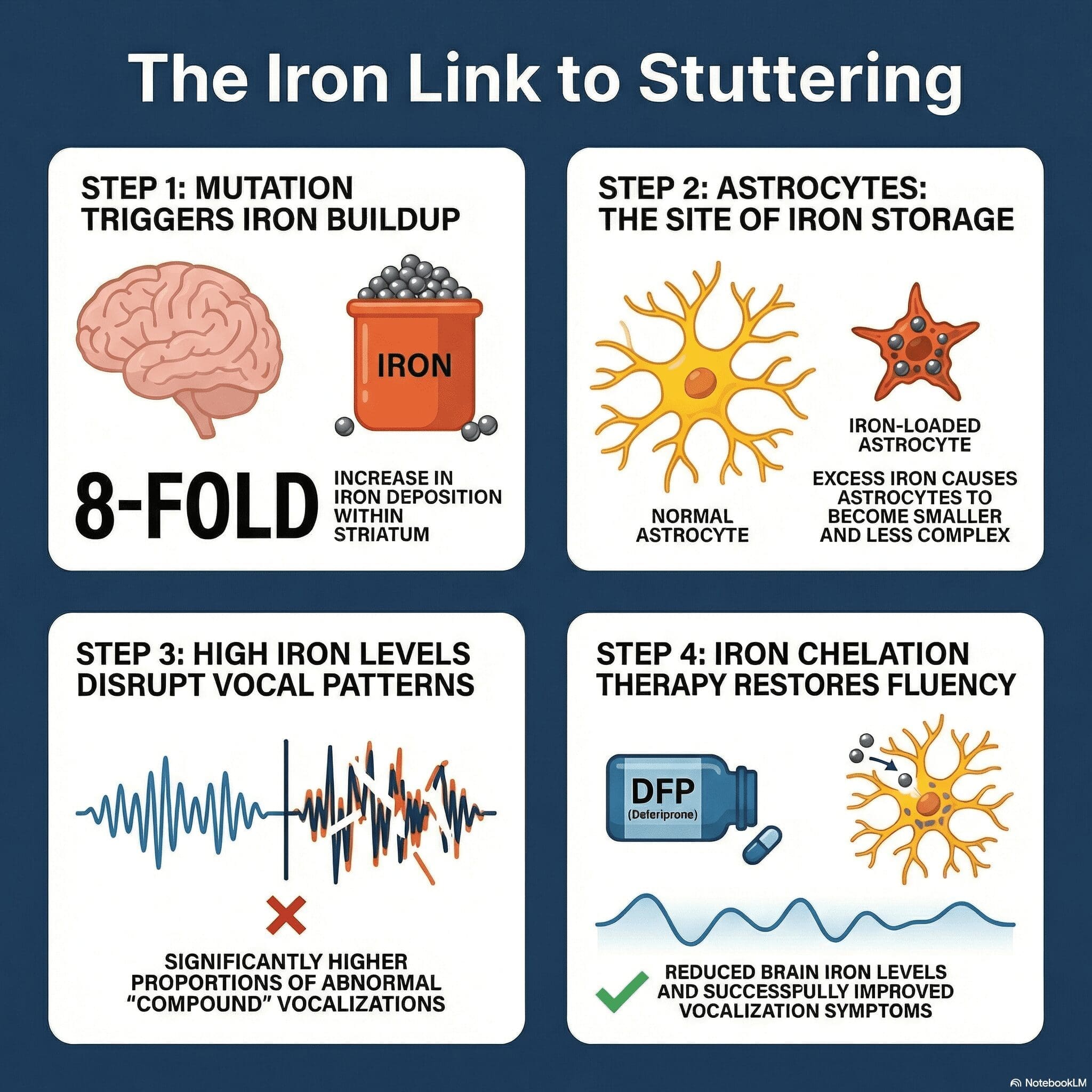
In the Body
How stuttering happens in the body.
Learn More
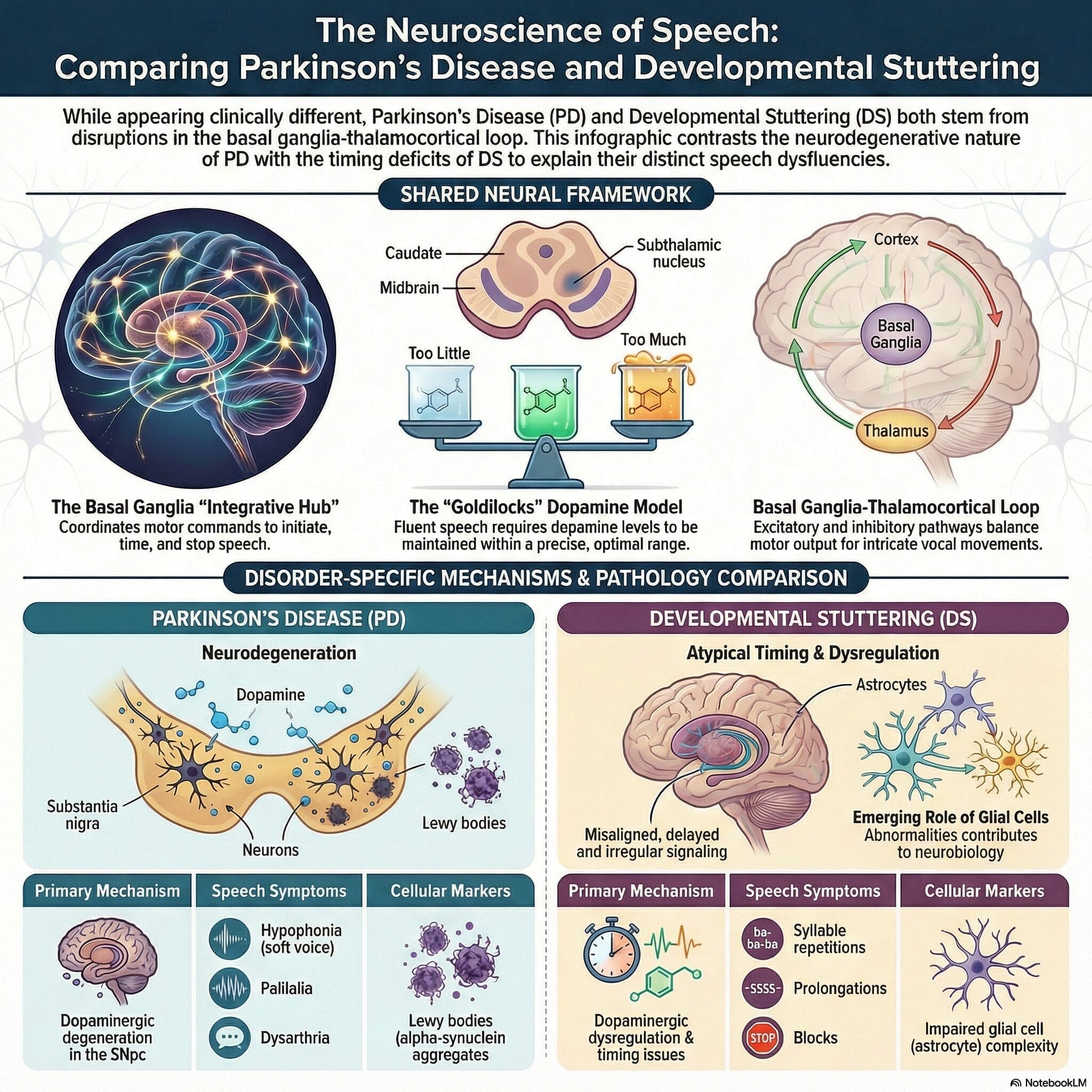
In the Brain
Why stuttering is biological, not behavioral.
Learn More


Maura Miles
Maura Miles is a Special Education teacher, community advisor, and person who stutters. Drawing from both her professional expertise and lived experience, she helps parents and teachers navigate IEPs, 504 Plans, and how schools can truly support students who stutter.
Understanding School Evaluations
When, Why & How A guide for parents navigating how schools identify and support students who stutter, from IEPs and 504 Plans to what qualifies a child for speech services.
Understanding Low Incidence Disabilities & Funding
Learn how stuttering fits within special education funding, what schools are required to provide, and how parents can advocate for their child’s needs.
Parent & Teacher Guide to Supporting Students Who Stutter
Learn how parents and teachers can support students who stutter, including practical do’s and don’ts, classroom strategies, how to respond in the moment, and how to access school services like IEPs and speech therapy.
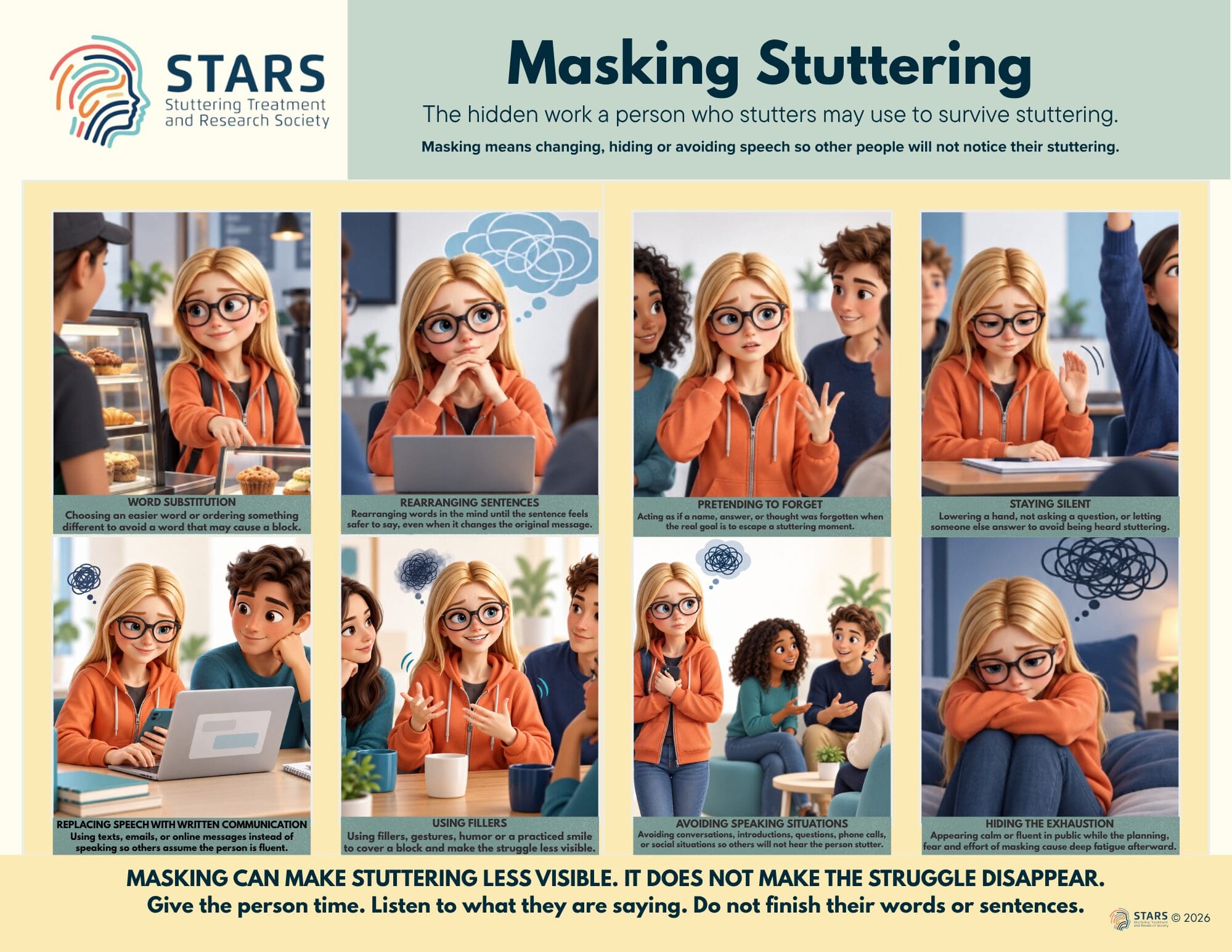
Masking Stuttering
Learn about the hidden work individuals who stutter may do to keep stuttering from being noticed, from swapping words and staying silent to avoiding speaking situations altogether, and how listeners can respond with patience and support.
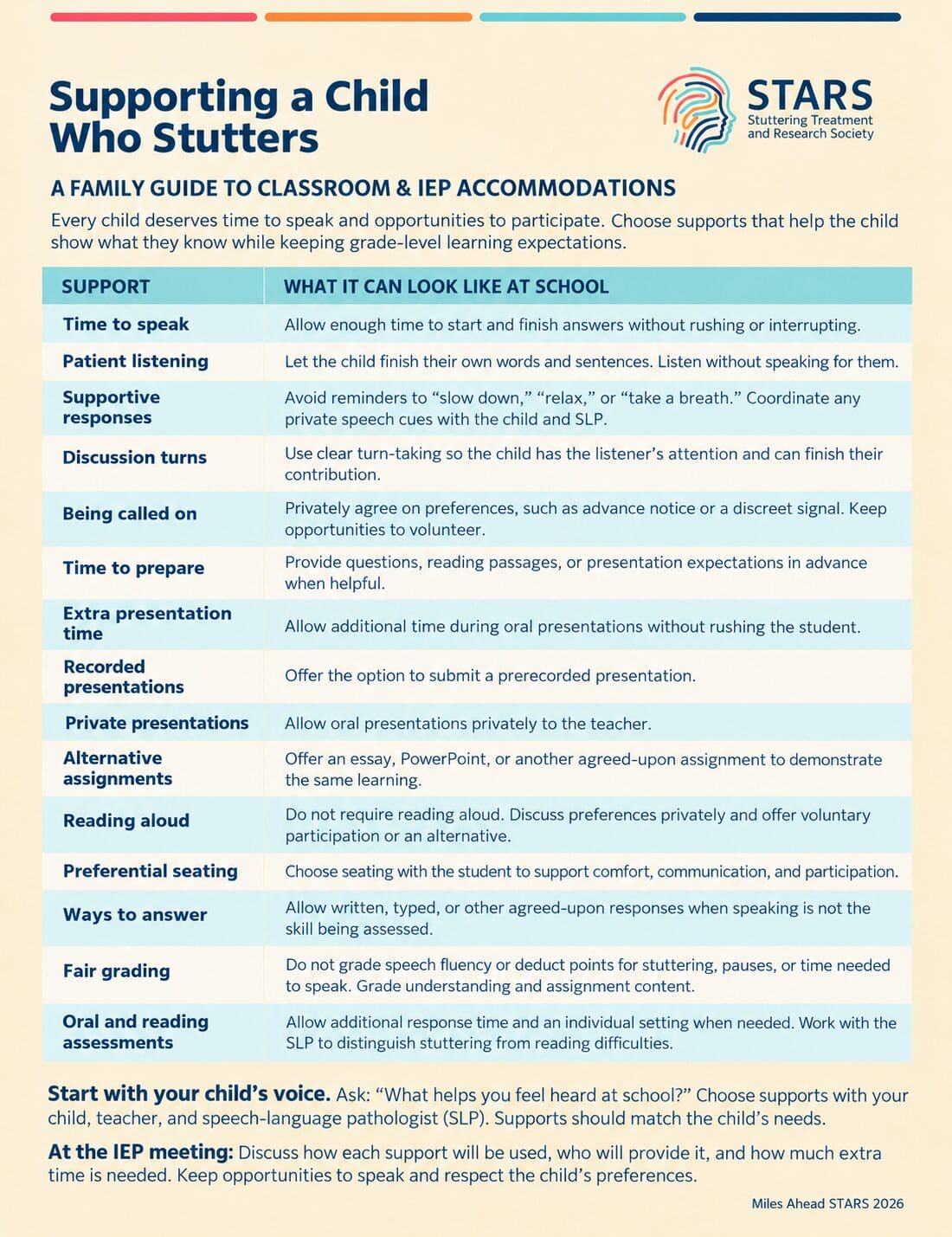
Supporting a Child Who Stutters
Learn which classroom and IEP accommodations can help children who stutter participate fully at school, from extra time to speak and flexible presentation options to fair grading practices, and how families can work with teachers and speech-language pathologists to choose supports that fit their child’s needs.
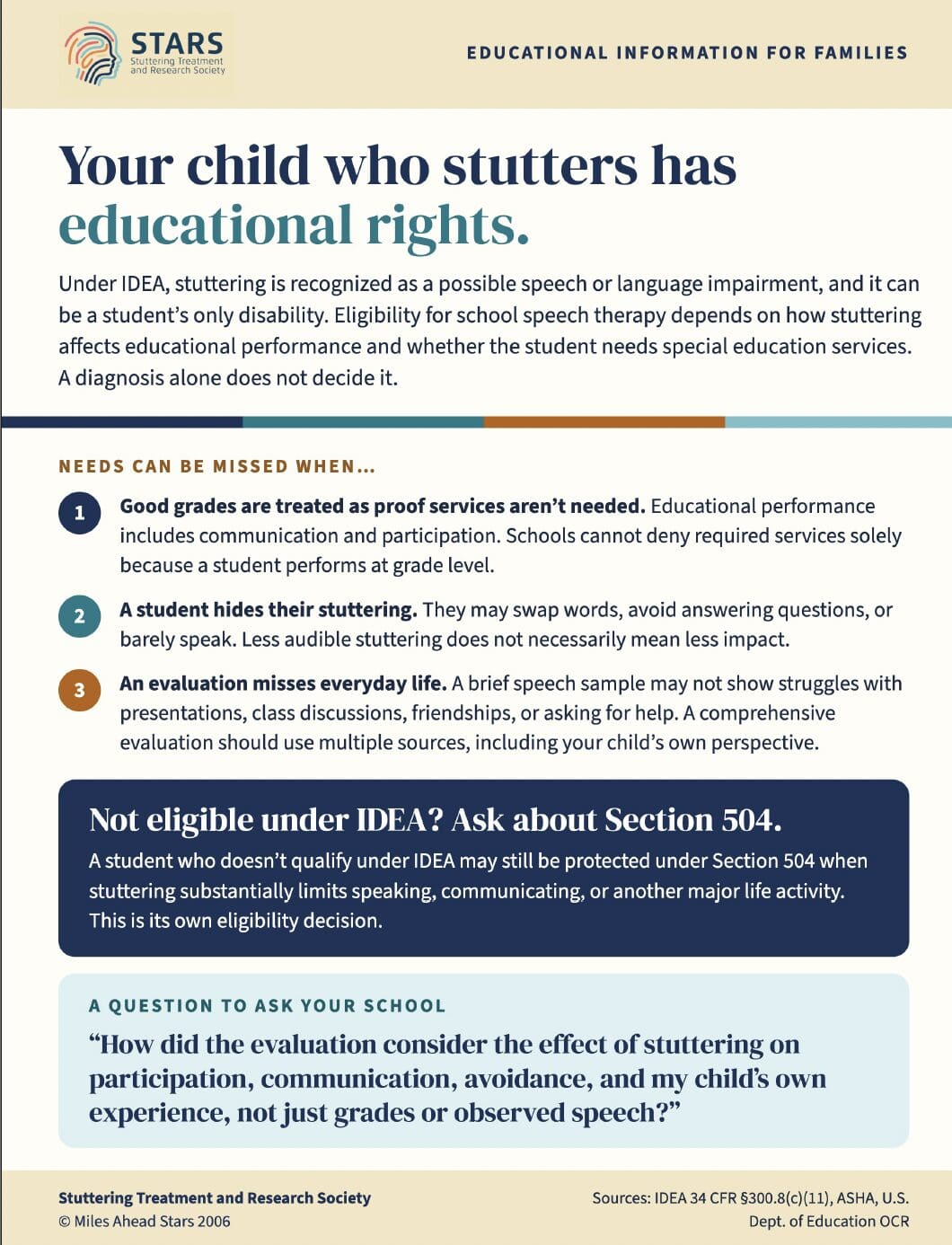
Your Child Who Stutters Has Educational Rights
Every child who stutters deserves the right support at school. STARS Community Advisor, Maura Miles, helps parents understand their child’s rights and how to speak up for them. It explains why good grades don’t always mean a child is doing fine, how kids sometimes hide their stuttering, and why a short speech test may not show the full picture. It also covers what to do if your child doesn’t qualify for speech services, plus one key question to ask your school.
 English
 Spanish
 Portuguese
 Japanese